The Handoff Nobody Owns: Where Deals Quietly Die After They Close
Picture the moment right after a deal closes. A congratulatory note in Slack, maybe an actual bell if the office still does that. Then, some number of days later, the customer's first real call with whoever's supposed to deliver the actual work.
If you've ever sat in on one of those calls as the person receiving the account, you know the sinking feeling when it becomes obvious you weren't told anything useful. Not the real reason they bought. Not what was promised in the sales conversation that isn't technically in the contract. Not what “success” is supposed to look like for this specific account six months out.
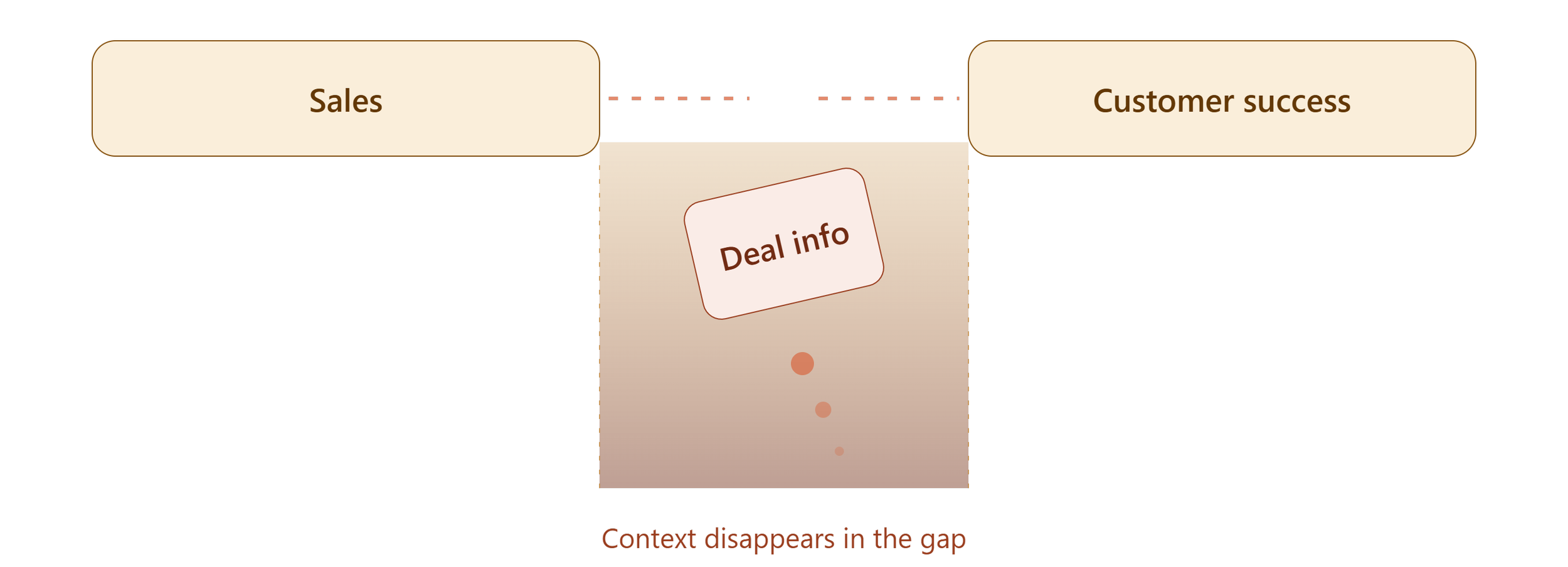
This gap isn't really anyone being careless, most of the time. It's that nobody owns the handoff as its own job. It defaults to whatever the closing rep remembers to mention on their way to the next deal, which is usually less than they think and less than the account actually needs.
A required handoff document, built into the deal-closing process instead of tacked on after, fixes most of this. Not a form nobody reads. A few specific fields that force the person who closed the deal to actually write down the why, and a CRM stage that literally can't move to onboarding without it.
Cheap to build. Constantly skipped anyway, because it never feels as urgent as the next quota-bearing conversation, right up until an account quietly churns and nobody can point to exactly where it went wrong.
This kind of handoff structure is usually one of the first things I fix: